
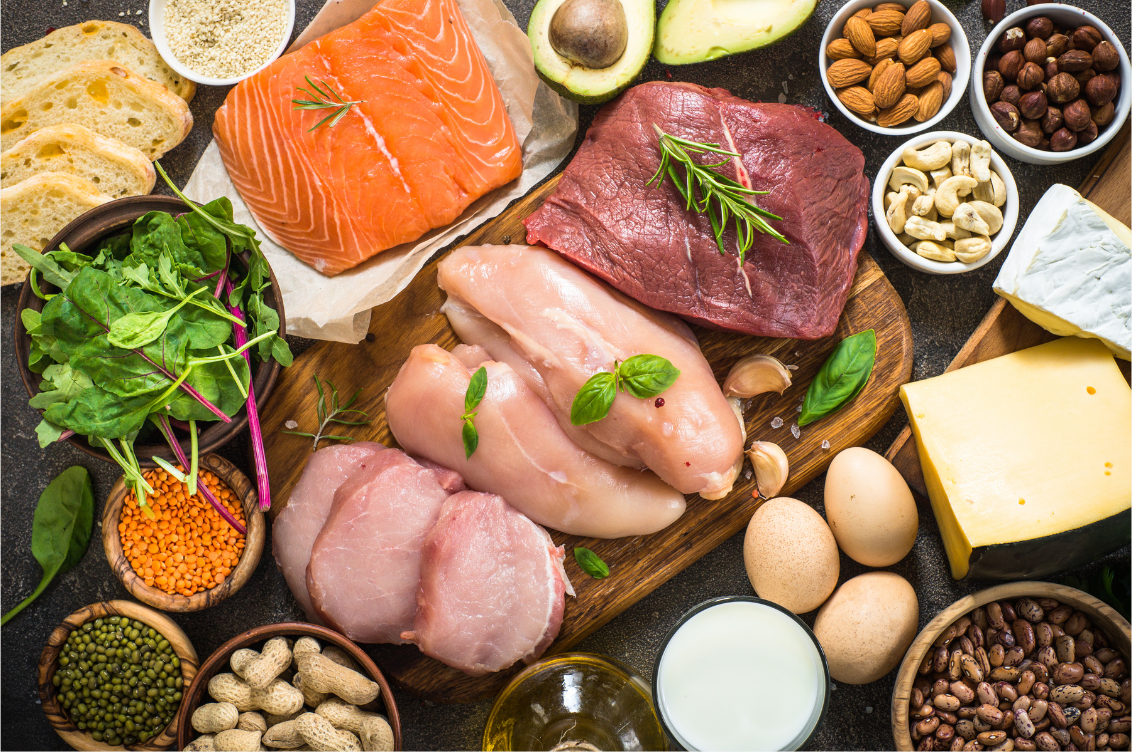
If I could only fix one thing in a woman’s diet, it would be this one. Not the sugar. Not the carbs. Not the wine on a Friday night. Protein.
Almost every client who comes to me for fat loss is eating somewhere between 60 and 80 grams of protein a day. She is hungry by mid afternoon, she is raiding the pantry after the kids go to bed, and she cannot work out why the scale has stopped moving when she is eating so much less than she used to.
The good news is that this is one of the easiest things to change, and it is one of the few changes where you feel the difference within about a week.
Why protein matters more when you are trying to lose fat
When you are eating in a calorie deficit, your body has to find energy from somewhere. It would be lovely if it only ever took that energy from body fat, but that is not how it works. If you are not giving it enough protein and you are not asking your muscles to do anything, it will happily break down muscle tissue as well.
That is how women end up smaller but softer. The number on the scale drops, the clothes fit a bit better, but the shape underneath has not really changed and the whole thing feels like a bit of an anticlimax.
Protein does three useful things at once here.
- It protects your muscle. Muscle mass starts slowly declining from about age 30 and it is the tissue that keeps your metabolic rate up. Muscle is metabolically active, which means it costs you calories just to exist. Losing it is the last thing you want in a fat loss phase.
- It costs more to digest. Your body uses more energy breaking down protein than it does breaking down fat or carbohydrate. It is not a magic trick, but it is a small ongoing advantage that runs in the background all day.
- It keeps you full. This is the one you will actually notice. Protein is the most satiating macronutrient by a long way. Get it right and the 3pm hunger that felt like a personality flaw quietly disappears.
Working out your number
For fat loss, I use a general guideline of 1.5 to 2 grams of protein per kilogram of body weight per day.
| Your weight | Lower end (1.5g/kg) | Upper end (2g/kg) |
|---|---|---|
| 60 kg | 90 g | 120 g |
| 70 kg | 105 g | 140 g |
| 80 kg | 120 g | 160 g |
| 90 kg | 135 g | 180 g |
If you are currently sitting around 70 grams a day, do not try to leap straight to the top of that range. Start at the lower end, get comfortable there, and build. A target you hit four days out of seven is worth nothing compared to a target you hit every day.
One note before you start. If you have a kidney condition, are pregnant, or are managing a diagnosed health issue, check your protein target with your GP or dietitian first. For most healthy women this range is very ordinary, but it is worth a conversation if any of that applies to you.
The number that matters more than the daily total
Here is the part most people miss. Hitting 120 grams of protein is not much use if 90 of those grams arrive at dinner.
Aim for 30 grams or more at every meal. That is the number that changes how your day feels. It is the difference between eating breakfast and forgetting about food until lunchtime, versus eating breakfast and thinking about a snack forty minutes later.
And if you only fix one meal, fix breakfast. It is where almost everyone loses the most ground. A typical Australian breakfast of two pieces of toast with avocado and a coffee comes in around 10 grams of protein. That is not a bad breakfast. It is just not a breakfast that is going to hold you.
Thirty grams at breakfast is the single change that fixes the most afternoons.
Rise With Teagan
What 30 grams of protein actually looks like
This is where it clicks for most people. These are approximate, and brands vary, so check the label on the things you buy regularly.
| Food | Roughly |
|---|---|
| Cooked chicken breast, 100 g | 31 g protein |
| Lean beef mince, 100 g cooked | 26 g protein |
| Salmon fillet, 100 g cooked | 25 g protein |
| Tin of tuna in springwater, 95 g drained | 23 g protein |
| High protein Greek style yoghurt, 200 g tub | 18 to 20 g protein |
| Two large eggs | 13 g protein |
| Cottage cheese, 100 g | 11 to 12 g protein |
| Firm tofu, 150 g | 17 g protein |
| Cooked lentils, 1 cup | 18 g protein |
| Shelled edamame, half a cup | 9 g protein |
| Milk, 1 cup | 8 to 9 g protein |
| Protein powder, one 30 g scoop | 22 to 25 g protein |
Look at that list and you will notice something. Two eggs on their own do not get you to 30. Neither does a tub of yoghurt. Almost every 30 gram breakfast is two things put together, not one.
Five breakfasts that get you to 30 grams
- Yoghurt bowl. A 200 g tub of high protein Greek style yoghurt, a handful of berries and a scoop of a higher protein granola or some seeds. Fastest option in the house.
- Eggs, upgraded. Two eggs on toast is around 20 g once you count the bread. Add a serve of cottage cheese, a bit of smoked salmon, or a third egg and you are there.
- Overnight oats made properly. Made with milk and a scoop of protein powder instead of water and nothing. Try the vanilla blueberry overnight oats or the vanilla strawberry and coconut version. Both get made the night before, which is the real selling point.
- Last night’s dinner. There is no rule that says breakfast has to look like breakfast. Leftover mince, leftover chicken, an egg on top. This is my most common one on a school morning.
- A savoury bake you made on Sunday. Something like the sundried tomato and ham egg bake, cut into portions and grabbed on the way out the door.
Do you need protein powder?
No. You can absolutely hit these numbers with food, and food should be doing most of the work.
But I use it, and I recommend it to plenty of clients, because it solves a specific problem. It is the cheapest, fastest way to add 25 grams of protein to something that was going to fall short anyway. Oats, a smoothie, yoghurt, pancakes. If protein powder is the thing that makes breakfast work on a Tuesday, use it and do not feel weird about it.
Lunch and dinner without doing maths
Once breakfast is sorted, the rest is mostly portion sizing. A palm sized serve of meat, chicken or fish is roughly 25 to 30 grams of protein for most women. Build the rest of the plate around it.
- A palm sized serve of protein, or a bit more
- Half the plate in non starchy vegetables for fibre and volume
- A serve of a starchy carbohydrate if you have earned it and enjoy it
- A thumb of healthy fat, which is usually already in the sauce or the dressing
Salads are the sneaky one. A big colourful salad can look like a perfect lunch and contain 8 grams of protein. If lunch is a salad, something substantial has to go in it. Chicken, tuna, boiled eggs, tofu, chickpeas, or all of the above. The tuna, chickpea and edamame salad is a good template for what a lunch salad should actually contain.
What I would do this week
Do not overhaul everything. Do this instead.
- Track protein only, for three days. Not calories, not carbs. Just protein, and do not change anything yet. Most women are genuinely shocked by the number.
- Fix breakfast. Pick one of the five above and eat it every weekday. Boring is fine. Boring is what works.
- Add one protein snack to the house. Something you can grab at 3pm without thinking. Yoghurt, a boiled egg, cottage cheese and crackers, edamame.
Give it a week and pay attention to your afternoons rather than the scale. That is where you will see it first.
Questions I get asked constantly
Is that much protein bad for your kidneys?
For healthy kidneys, this range is not a problem and the research is pretty settled on that. If you have existing kidney disease it is a genuinely different conversation, and one to have with your doctor rather than the internet.
Will eating this much protein make me bulky?
No. Protein does not build muscle on its own, training does, and building noticeable muscle as a woman takes years of deliberate effort. What protein does in a fat loss phase is stop you losing the muscle you already have.
I am vegetarian. Can I still hit this?
Yes, it just takes more deliberate planning because plant proteins are less concentrated. Lean on eggs, dairy, tofu, tempeh, edamame, lentils and legumes, and expect to combine two or three sources per meal rather than one. A protein powder makes it considerably easier.
Do I count the protein in bread, rice and vegetables?
Yes, it all counts, and it adds up more than you would think across a day. But do not rely on it. Build each meal around a real protein source and treat the rest as a bonus.
Do I have to track forever?
Definitely not. Tracking is a learning tool, not a lifestyle. You track for long enough to learn what portions look like and where your gaps are, then you let it go and eat intuitively with much better instincts than you had before.
Where to from here
Protein is the first thing I fix with every single client, and it is the change that gets the fastest thank you. Start with breakfast this week and let everything else stay exactly as it is.
If you would rather not work all of this out on your own, that is what the membership is for. Every recipe in there is built high protein by design, so you hit the number without doing the sums.