
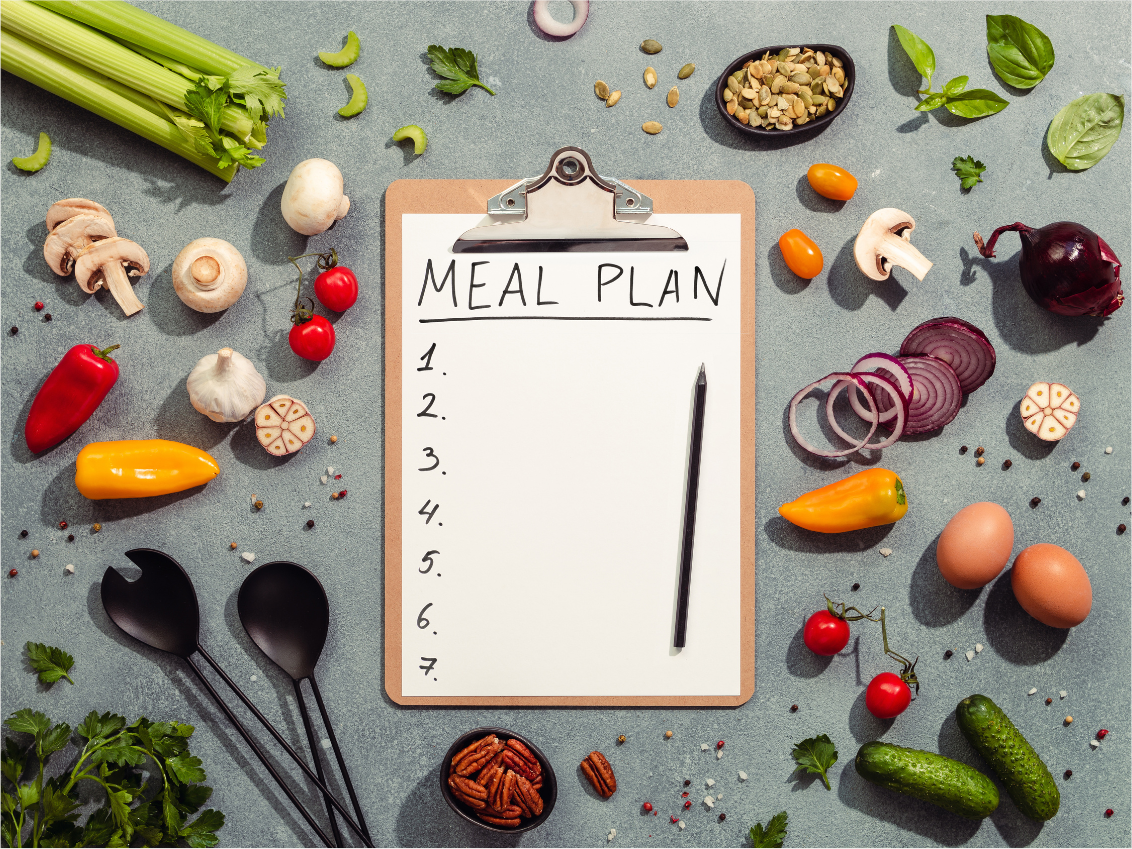
Most meal plans are written for a week that never happens. Seven perfect dinners, nothing repeated, no late finishes, no forgotten training night, no kid who suddenly announces at 5pm that they hate chicken now.
Then Wednesday goes sideways, you order in, and the plan is dead. Not because you are disorganised, but because the plan had no room in it for a normal week.
This is how I plan for my own family of five, and how I set it up for clients. It is built to survive a bad week, not just a good one.
Why meal plans fail
Three reasons, and they are almost always the same three.
- Too much variety. Seven different dinners means seven different ingredient lists, seven lots of mental effort and a fridge full of half used things. Variety feels exciting on Sunday and exhausting by Tuesday.
- No slack in it. If the plan assumes every night goes to schedule, one disruption breaks the whole thing. A good plan has gaps built in on purpose.
- It only covers dinner. Dinner is usually the meal people manage best. Breakfast, lunch and the 3pm gap are where fat loss actually gets decided, and they almost never make it onto the plan.
Plan five, not seven
Start here, because it changes everything else. Plan five dinners for a seven night week.
- Five planned dinners. Cooked from your shop.
- One leftovers night. Whatever is in the fridge, assembled. No cooking.
- One night off. Takeaway, toasties, eggs on toast, dinner at your mum’s. Whatever it turns out to be.
That last one is the important one. If you have not planned a night off, every unplanned night feels like failing. If you have planned it, the takeaway on Friday is part of the plan working, not evidence that it is broken. Same food, completely different story in your head.
If you have not planned a night off, every unplanned night feels like failing.
Rise With Teagan
Build a rotation, not a fresh plan every week
The single biggest time saver is to stop starting from scratch. You do not need a new plan every Sunday, you need a rotation you dip into.
Pick ten dinners your household will genuinely eat. Not aspirational ones. Ten meals that get eaten without complaint, that you can cook without reading the recipe twice, and that fit your goals. Write them on a list and stick it inside a cupboard door.
Now planning a week is a two minute job. Pick five off the list. Add a new one occasionally if you want to grow the rotation. That is it.
Good candidates for a rotation are the ones that reheat well, use ingredients you already keep, and can be adjusted for different people out of the same pan. Things like the sweet potato beef taco bowl, the teriyaki beef bowl or the zucchini lasagna earn their place because everyone can build their own plate from the same base.
Put breakfast and lunch on autopilot
Here is where I differ from most meal plans. I do not want variety at breakfast and lunch. I want zero decisions.
- Breakfast: pick one, eat it every weekday. Change it when you get sick of it, not before. Make sure it has 30 grams of protein in it.
- Lunch: last night’s dinner plus something. Cook extra at dinner deliberately so that lunch is already made. This is the cheapest, fastest lunch strategy there is.
- Snacks: two options, always in the house. Not five, two. Something like yoghurt and berries, or a boiled egg, or the vanilla almond protein dip with apple slices.
Save your decision making energy for dinner, which is the meal that actually needs it.
The twenty minute Sunday session
This is the whole process. Set a timer if you are the kind of person who spirals.
- Look at the actual week first. Before you pick a single meal. Which nights are late? Who has training? Is anyone away? A Tuesday with netball pick up at 6.15 gets the fastest meal on the list, not the one that needs forty minutes in the oven.
- Check the fridge and freezer. Build around what is already there and about to turn. This is where most of the money gets saved.
- Pick five dinners from your rotation. Assign them to specific nights based on step one.
- Confirm breakfast, lunch and the two snacks. Usually this is just checking you have the ingredients.
- Write the shopping list from the plan. Not from a general sense of what you need. From the plan.
- Decide the one prep job. One, not six. Cook a tray of chicken, boil a dozen eggs, or make the overnight oats. Whatever removes the most friction from your particular week.
The backup shelf
Every plan needs a fallback, because some weeks are just a write off. Keep a small stash of things that turn into a decent meal in ten minutes with nothing fresh required.
- Tinned tuna or salmon
- Tinned chickpeas, lentils or beans
- Eggs, always
- Frozen vegetables and frozen edamame
- A packet of microwave rice or quinoa
- Wraps or pita in the freezer
- One good sauce that makes anything taste deliberate
That shelf is the difference between a bad Wednesday and a bad week. Nothing on it is exciting. All of it beats the alternative.
Feeding a family who are not on your plan
You should not be cooking two dinners. Cook one base and let people build their own plate.
Mince, chicken, salmon or tofu goes in the middle of the table. Rice or potato or wraps next to it. Vegetables and salad next to that. You take a bigger serve of protein and vegetables and go lighter on the carbohydrate. The kids take more carbohydrate. Everyone eats the same meal and nobody had to be catered for separately.
Bowls, tacos, stir fries and loaded potatoes all work like this by design, which is why so many of my recipes are built that way.
What I would do this week
- Write your ten. Sit down and list ten dinners your household actually eats. This takes about fifteen minutes once and then serves you for months.
- Plan five, not seven. Leave a leftovers night and a night off in there deliberately.
- Stock the backup shelf. Do it on this week’s shop so it is there for the week that falls over.
Questions I get asked constantly
Will I get bored eating the same things?
Less than you think. Most of us already eat a fairly small rotation, we just do it accidentally and inefficiently. Deliberate repetition at breakfast and lunch frees up the energy to actually enjoy dinner.
What if I hate cooking?
Then build a rotation of the ten laziest meals that still hit your protein target. Meal planning is not about cooking more, it is about deciding less. Someone who hates cooking benefits from a plan more than anyone.
Is meal planning the same as meal prep?
No, and you do not have to do both. Planning is deciding in advance. Prep is cooking in advance. Planning is the one that does the heavy lifting, and plenty of people get great results with a solid plan and almost no batch cooking at all.
How do I plan when my weeks are never the same?
Plan the meals, not the days. Pick five dinners for the week and slot them in as the week reveals itself. Shift work and unpredictable rosters are exactly the situation where a rotation plus a backup shelf beats a rigid Monday to Friday schedule.
How far ahead should I shop?
One week is plenty for most households. Any further out and the fresh food does not hold, which is how good intentions end up in the bin.
Where to from here
A plan you can follow on your worst week is worth ten plans you can only follow on your best one. Start with your ten meals and go from there.
If you would rather have the planning done for you, that is exactly what the membership does. Meal plans built around high protein recipes, with the grocery list already written, so all you have to do is shop and cook.